I have been reading the works of WG Sebald, whose brief body of work ended with his premature death at the age of 57 in 2001. The New Yorker has written an appreciation of Sebald, which insightfully describes his work as a combination of “memoir, fiction, travelogue, history and biography in the crucible of his haunting prose style”, with its evocation of exile, memory and loss. It is not my intention in this brief essay to embark on a critical analysis of his four prose works: Vertigo, The Emigrants, The Rings of Saturn and Austerlitz, but to engage in a bit of a digressive wander through them.
Sebald’s Vertigo consists of four long sections, the first of which is a brief biography of Stendhal, a near contemporary of Flaubert, who shared both the latter’s literary realism and love of womanising. Why Stendhal? It has been suggested that Sebald embarked on his literary journey, with his books largely consisting of an amalgam of fictional and real journeys, inhabited largely with real characters, having become disenchanted with the strictures and constraints of academic writing. Apparently, Stendhal, whose life was both literary and military, was confronted with a similar dilemma. In this way, Vertigo, with its journey theme, where the narrator is beset with fear and uncertainty, was a stage in Sebald’s literary journey and a reference to the anxiety that existential freedom can bring.

The section in Vertigo on the journey through Europe – Vienna in particular – brought a journey of mine to that city some decades ago to the forefront of my mind, having been relegated to my archived memory for years, only now to be re-assembled, almost inevitably imperfectly. Together with my partner and her parents, we drove from England to Vienna to visit relatives. I was fatigued as we approached Vienna. It grew dark and began to rain very heavily. I had little idea how to find our relatives’ apartment, but due to some sort of serendipity that still astonishes me, we found it without difficulty. Vienna was still, even in post-Imperial decline, a city whose famous Ring was full of pompous wedding-cake architecture and fur-coat clad matrons, one of whom struck me with her umbrella when she thought I was not behaving at the lofty standards she expected. Of course, we visited the Prater. I had imagined a rather sinister place, with Harry Lime lurking in doorways, riding the Ferris wheel to the sound of zither music. Instead, it was just a big amusement park, full of people determined to enjoy themselves.
The Emigrants consists of four stories of exile, loss and the importance of memory. As with all Sebald’s work, at least to my mind, the hypnotic, almost dream-like rhythms of his prose create a profound, yet imprecise and somehow, blurred impression, a little like a later painting by Turner, perhaps. In the fourth, and perhaps most moving section of The Emigrants, Sebald is in search of traces of the family history of the subject of this part of the book, a painter called Max Ferber, in the birthplace of his family. The local synagogue, burned and vandalised on Kristallnacht, is now a labour exchange with no acknowledgment of the place’s history. He is given a key to the overgrown and unkempt Jewish cemetery.
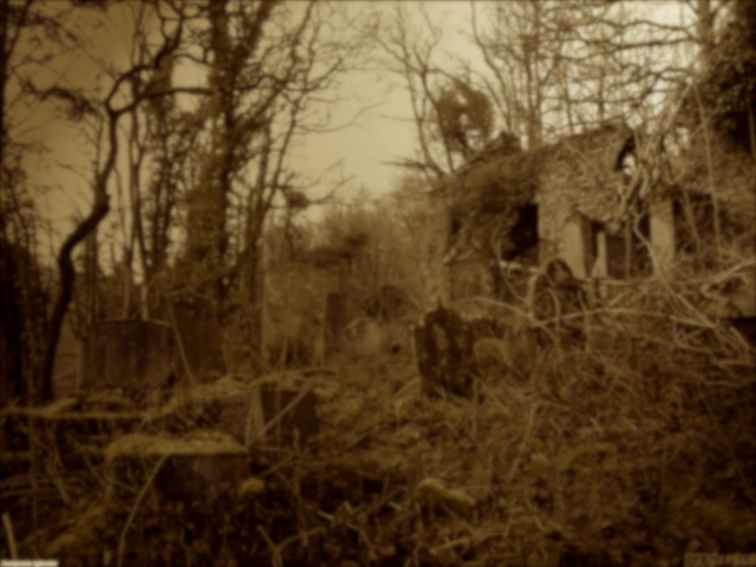
It does not fit. He clambers over the fence and amidst the broken headstones, he finds one that commemorates the painter’s parents and grandparents, only one of whom was buried there. The rest were all transported, firstly to the ghetto at Łódź (Litzmannstadt) in Poland and then to their deaths at Chelmno or Auschwitz. Sebald writes movingly of “the mental impoverishment and lack of memory that marked the Germans, and the efficiency with which they had cleared everything up.”
The idea that, once exiled, emigrants can never return home, because both the emigrant and the ‘home’ have changed, and changed utterly, recurs throughout the book. This notion of rootlessness came to mind while I was watching the excellent Saigon at the Melbourne Arts Centre recently. It too dealt poignantly with exile and loss, in this case people of the post-Vietnam diaspora, exiled for over 20 years, never fully part of their place of exile, only to return to Vietnam only to discover both they and it had changed, changed utterly. This same feeling of rootlessness affects those who left home when young, travelled the world, and ‘settled’ elsewhere, and yet are never fully at home anywhere.
The first two of Sebald’s works of neo-fiction, Vertigo and The Emigrants, share a feature with some of the works of Julian Barnes, such as Levels of Life and Flaubert’s Parrot, in that they consist of a set of (loosely) connected stories within the framework of an overarching theme. Furthermore, Barnes, like Sebald, fictionalises real events, sometimes, but not always changing names of the actors in the book. In Barnes’ part-memoir, part fiction Levels of Life, he imagines how Sarah Bernhardt, and others, became involved in balloon flight; in Arthur and George, the intersections in the lives of Arthur Conan Doyle and George Edalji; and in The Noise of Time, the life of Shostakovich in the midst of the Stalin nightmare.

The Irish writer, John Banville, a Sebald admirer, employs this imagining of real events in his novel The Untouchable, whose (very) thinly disguised central character is Anthony Blunt and whose sardonic contemporary is an equally thinly disguised Graham Greene. Sebald’s approach is often, but not always, to disguise real people in describing real events – in The Emigrants, for example, all four emigrants are based on real people, as is the temple-building farmer in The Rings of Saturn.
The framework of The Rings of Saturn is that of a conventional narrative: that of a walking journey around East Anglia. It is, however, both a physical and intellectual journey, full of the digressions that are a hallmark of his work. It also a story of decay and ruin: ruined monasteries, tumbledown estates, diseased trees, destroyed woodland, abandoned secret research stations. All of these act as symbols for what he imagines to be the future extinction of civilisation. There seems to be but one example of construction in the book – that of the replica of the Temple of Jerusalem being built by a farmer in Suffolk, but who himself doubts whether he will ever complete the work. One long piece is on Sir Roger Casement and Joseph Conrad, and their experiences of the Congo (so-called) Free State, the private fiefdom of King Leopold of the Belgians and the scene of horrific excesses of exploitation, rape, mutilation, enslavement and murder. Casement had been sent by the British Government to investigate accusations of atrocities. His damning report was unexpected, and probably unwanted. His experience transformed his views on colonialism and as a result, he became a fervent support of Irish independence. He was later to be hanged for treason for his actions: he had no chance of acquittal – the prosecuting counsel, FE Smith, was a leader of the Ulster Unionists vociferously opposed to Home Rule, and the British Government had circulated excerpts from diaries before the trial that revealed that Casement was gay. Conrad, who had travelled to the Congo to work as a sailor, was appalled by what he had discovered and wrote the famous Heart of Darkness, a thinly disguised fiction, to describe his experiences.
Sebald’s final work, and arguably, his masterpiece, is Austerlitz. By now he had left the architecture of Vertigo and The Emigrants behind. This book consists of a single chapter of one continuous paragraph and complex sentences that often run on for pages (for this stylistic reason he has been compared, in my view erroneously, to Joyce), hurling the reader onwards through the narrative and illustrated with the sort of grainy, uncaptioned black and white photographs that are to be found in his other work: they add to the book’s air of melancholy. As in Vertigo, and The Emigrants, the central character of Jacques Austerlitz is an exile, who may or not be a fictional character, or a disguised real one, whom the narrator, who may or not be Sebald, meets occasionally and often by chance in Liverpool Street Station, Antwerp and elsewhere, over a period of years. He left Europe on a Kindertransport and is adopted by a Welsh preacher and his wife, who tell him nothing of his background. His parents remained behind, unable to leave, and are transported, in this case to the Terezen (Theresienstadt) ghetto and their death. As Austerlitz discovers his identity, he embarks on a journey through his past, the retelling of which is the substance of his occasional meetings with the narrator. It is both a story of a sad and lonely life, but at the same time a powerful and moving account of the Nazi’s expulsion of the Jews from Prague and their subsequent extermination and of how events beyond an individual’s control can shape their life. Once again, Sebald is writing of exile, memory and loss.

Having edited, reworked, expanded, reduced, and re-edited this piece repeatedly over a period of weeks, I am less sure now of what, if anything, I was trying to do when first I wrote it. But now it’s time to let it go. I suppose it is some sort of homage to a great writer who deserves greater recognition, to the resonance and deep pleasure one gets from reading him again and again, to the evocation of my past, imperfect though those recollections may be. With each reading I discover more and more and uncover new avenues of internal exploration, led there by Sebald’s love of digression. After all, old men should be explorers.
The images used in this essay are all freely available on the Internet and reproduced here under the fair use provisions of the Copyright Act. I also acknowledge my use of small fragments from WB Yeats’ Easter 1916 and TS Eliot’s East Coker.
 Miscellany