Posts on this page are most recent first: scroll down to find earlier posts
A revised opinion on debt and deficits
To stimulate the economy during the Covid pandemic governments, including Australia’s, have injected large amounts of money into the economy in an effort to prevent economic disaster. Money, it is claimed, that will need to be repaid at soem point. This has led to a series of hand wringing statements by ministers and pundits about the implications for the future. The discourse is full of statements about tightening our belts, mortgaging the future, burdening future generations, the unsustainable national debt, and living beyond our means.
In this essay I will attempt to demonstrate that these concerns are based on a number of fundamental misconceptions about the nature of the economy and the concept of money. In a previous post I addressed the issue of government debt and tried to point out that the government deficits were not in themselves bad and that if governments were able to meet their obligations to their creditors over time then there was nothing wrong with a deficit per se. I also sought to draw a distinction between deficits incurred to fund infrastructure improvements or generally to improve societal well-being and those incurred through wastefulness such as giving further support to the already wealthy and rentier classes through tax cuts. I also made the point that increasing the wealth of the already wealthy would not add to aggregate demand so tax cuts so did nothing to help the economy but only increased the wealth of elites and increased already high levels of wealth and income inequality.
I now realise that my argument was flawed. A great deal of the conversation about government deficits and their implications for the future are based upon a fundamental misconception which equates federal government and household financing. This misconception is widespread and reinforced by apparently reputable commentators including the ABC which in one of its radio broadcasts asked callers to give them ideas on how to manage their budgets so that they could pass them on to the government. In my earlier post I sought to expose this flaw, but I omitted to mention the most fundamental difference which is that in most countries including Australia the federal government has what economists call monetary sovereignty. All that means is that the federal government through its central bank is a monopoly issuer of currency. We humble households are merely users of the currency. In the olden days the amount of currency that was issued – notes coins and so on – was backed up by a precious metal, usually gold, which meant that it was convertible to the underlying precious metal. So, in theory, people could get gold in exchange for their currency. This limited the amount of currency in circulation. This all came to an end a long time ago and its last hurrah, which cut the link between the US dollar and the price of gold, was in 1971. Since then, in almost every country, currency is issued without any backing – fiat currency in the economists’ jargon. Countries that issue and borrow in their own country’s currency such as the US, UK, Australia and others can, in principle, issue as much currency as they like. That doesn’t mean printing more notes and minting more coins: money is created by computer keystroke these days. So, what’s to stop political leaders from issuing as much money as they like? Nothing really. The only constraint that if too much money gets issued beyond the resources available to consume it, high levels of inflation will result. However, inflation is not necessarily in of itself a bad thing: low levels of inflation merely indicate that the economy is growing. Central banks as part of their remit are charged with setting inflation targets through monetary policy[1]. But, subject to the inflation constraint, the government can issue enough money to fund infrastructure, mitigate climate change, improve health outcomes, fund pensions and create jobs. Because, in essence, they are indebted to themselves.
So why don’t they? Because of the reasons highlighted above, namely the discourse that confuses household and federal finance and fails to recognise the unique position of governments as sole issuers of currency. This unorthodox view of the nature of money in the economy leads to a reconsideration of the national debt, for, if the government can issue currency without limit, subject to the inflation constraint, then it is able at the press of a key to eliminate the national debt. It’s just an accounting entry, nothing more. Extending this argument, from the accounting perspective, budget deficits and surpluses must net to zero – the government’s deficit is a surplus to the economy and vice versa!
So, in this environment of unlimited plenty why does the government tax us? I think there are a number of reasons. One is to cool down the economy if demand is rising too fast and leading to higher rates of inflation. Another is related to issues of distributional equity and yet another to discourage certain types of behaviour, such as smoking and excessive consumption of alcohol. There are a number of other technical reasons associated with the need for taxation which I’m not competent to go into here.
In this brief essay, I have tried to challenge the conventional wisdom about how debt and deficits are regarded and the deliberate(?) conceptual confusion that encourages us to compare the workings of the household budget and the workings of the economy. There are vast differences between them including those of scale and complexity: the one that I have focused on here relates to the monopoly power that governments have in issuing currency and its implications for economic management. I hope that the next time some politician or ‘expert’ tells you that the country is in debt up to its eyeballs and we’re mortgaging our future you will treat their remarks with a healthy dose of scepticism. After all, as my beloved mother used to say, it’s only money![2]
[1] The Reserve Bank of Australia is currently being criticised for failing to meet its inflation targets and thereby constraining Australia’s economy.
[2] Lest you think I’ve been drinking too much Kool Aid, the ideas that I have been clumsily expressing are based on a reputable body of economic thought called Modern Monetary Theory. If you want to know more, and understand better, I recommend you read the excellent The Deficit Myth by Stephanie Kelton, an American economist of some renown.
A house divided against itself[1]
Imagine, if you can, an Australian Republic with an elected executive head of state. After standing for re-election after a period of office, the sitting president is defeated by a candidate for whom enthusiasm is muted. When elected some years before, the incumbent stood as an anti-establishment figure whose appeal was both the disaffected and disenfranchised but also to the wealthy and privileged whose interests he really represented. He was elected despite failing to win a plurality of the votes due to the arcane electoral process that had been installed, allegedly, to balance state and federal rights, and despite overwhelming evidence of his unfitness for office: xenophobia, misanthropy, misogyny, racism, deception and philandering. His ‘outsider’ myth was based on his alleged success as a businessman, once again despite the evidence of sharp practice and multiple business failures.
There was hope that office would soften his sharp edges. This proved not to be the case. During his period of office, he demonised immigrants and caged their children, fraternised with demagogues, fired anyone who disagreed with him and surrounded himself with sycophants, bigots, right wing fundamentalists and family members (often these categories overlapped), evaded taxes and tried to hide the evidence, encouraged white supremacists and those who planned to kidnap a State Premier and execute her, teargassed peaceful protesters, wrapped himself in the Bible to gain and retain the support of evangelicals despite his behaviour, dismissed criticism and evidence of his failings as fake news and presided over the greatest public health disaster since the Great Plague[2].
So, what would we think of ourselves as Australians, if, after a period of office characterised by such manifest evidence of unfitness for office, he still commanded the support of nearly half of the voting population?
But that has just happened in the US. Despite the overwhelming weight of evidence, over 70 million people voted for Donald Trump. The relief that so many of us feel at his defeat must be tempered by that reality. 70 million people, many of whom feel that their candidate is the victim of a so-called ‘deep state’ conspiracy that depicts his opponents as Satan worshipping paedophiles. Of course, the problem with challenging conspiracies is the same as the problems with challenges to faith: deep seated beliefs provide simple reassurance amidst the complexities of the world and are impervious to the weight of evidence. Perhaps those of us who are astonished at how his supporters continue to believe in his fabrications and deceits underestimate ‘the liberation from selfhood…. the lure of mindless belonging and purpose’, that Anna Funder wrote about when describing the attractions of Nazism.
What has happened in the US since the election only deepens the schism in the US polity. A cursory glimpse at the distribution of the results not only shows the North East/West Coast versus Midwest/South divide, it reinforces a similar division between urban, overwhelmingly Democrat, and rural, Republican, America. The visceral hatred of the poorly educated predominantly rural white working class for what it sees as the evils of government is encouraged by the sense of privilege to office represented by Trump and his followers in the Republican Party.
In such a situation, it is difficult to be optimistic for the future. Much of the opposition to Trump is just that: opposition. It is more difficult to see what unifies it – from the Left to the ‘never Trumpers’. And, if as seems likely, the unrepresentively elected Senate[3] remains in Republican hands and with a conservative Supreme Court, Biden’s freedom of manoeuvre will be severely circumscribed. To make matters worse in two years’ time the mid-term elections will probably follow tradition and swing against the incumbent party. And in four years’ time, will America be ready for a minority woman President?
[1] I thought quoting Abraham Lincoln was appropriate in the circumstances
[2] This is only a partial list of his crimes and misdemeanours
[3] The American Democratic myth is just that: a myth. The president is elected by an Electoral College which often leads to a President being elected without winning the popular vote. The Senate returns two members per state, so states like Wyoming with a population of fewer than 600,000 have the same number of senators as California with a population of almost 40,000,000. Boundaries of electoral districts in the House of Representatives are gerrymandered by States to disadvantage poorer areas (just look at the electoral map if you don’t believe me), and the judiciary and many senior police are appointed based less on their jurisprudential or law enforcement capabilities than on their political alignment.
August 12: Identity and Freedom
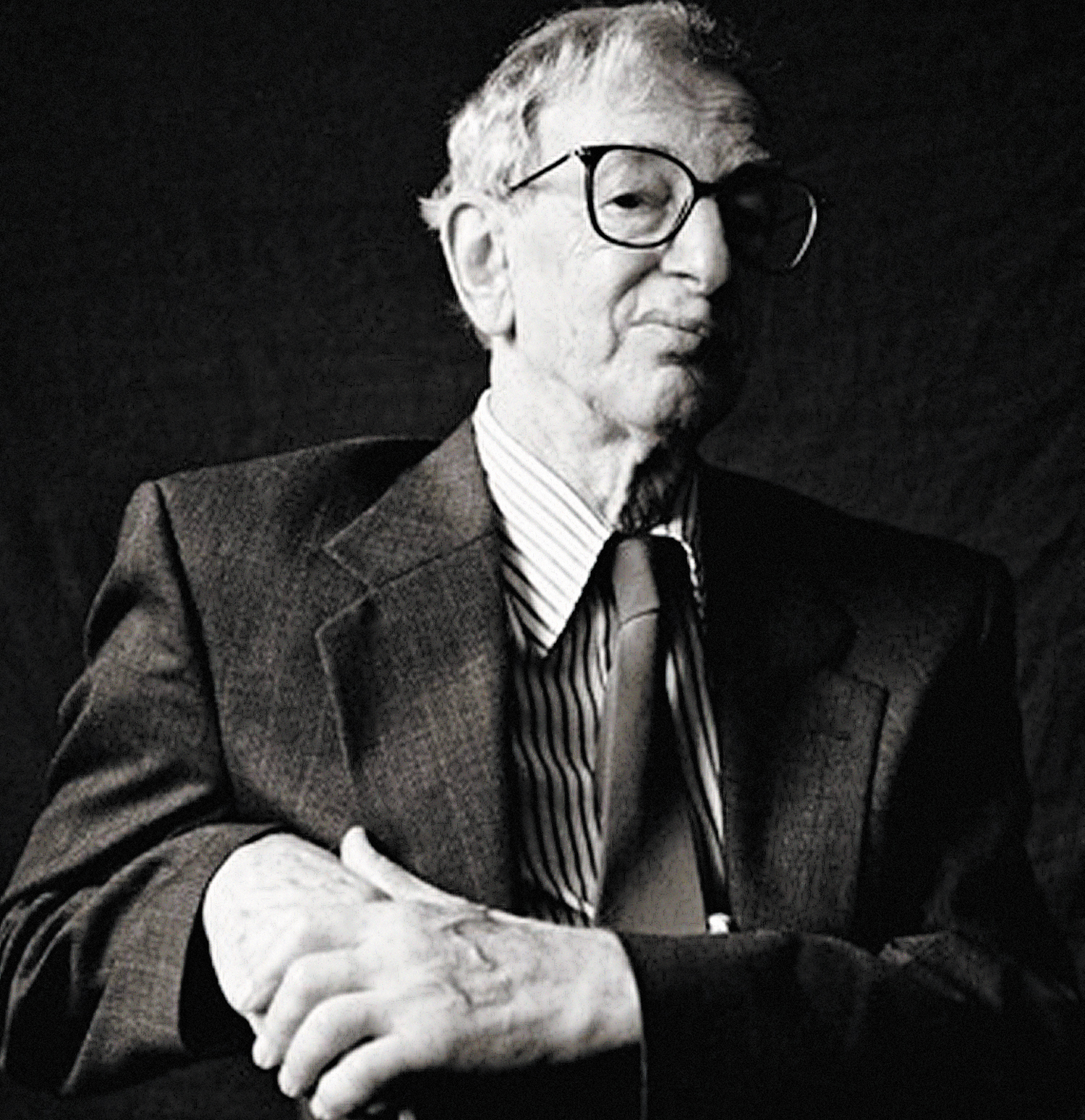
” The politics of identity …. [a] symptom of sickness rather than diagnosis, let alone therapy” – Eric Hobsbawm
“if you believe you’re a citizen of the world, you’re a citizen of nowhere” -Theresa May
I have been wrestling with the whole issue of identity and identarianism for some time. In some circles, largely those of the libertarian left and the authoritarian right, challenging the idea of identity and the rights associated with it is regarded with disdain and outright anger. I think how we can differentiate between these two views of identity is an issue that requires some thought. How else can we endorse the rights of some people to assert their identity while objecting to the rights of others to assert theirs? Perhaps it comes down to an agreed notion of rights and the obligations that come from membership of civil society (although agreement on what those obligations are is a complex issue that requires consideration).
Let me start with I regard as the easier problem: identity politics of the authoritarian right and its association with race and national identity. I think we need to place this phenomenon in an historical context. The 19th century saw the rise of movements of national ‘liberation’ – the Risorgimento in Italy, the creation of nation-states in South America. The aftermath of World War I led to the emergence of nation-states from the collapse of the great empires in Eastern Europe – Czechoslovakia, a greatly enlarged Romania, Hungary, the Baltic states and more. At the time, these newly created nation-states were seen as a positive expression of self-determination, at least in the victorious West, although the establishment of large ethnic minorities in newly formed Czechoslovakia, newly created Yugoslavia and expanded Romania led to simmering and unresolved tensions. On the other hand, the Sykes-Picot agreement between France and Great Britain led to the creation of the entirely artificial nation-states of Iraq, Syria and the Lebanon, each one reflecting the vestiges of Imperial hegemony. However, nations, defined as a large group of people who share the same culture, history or language, but do not necessarily have sovereignty, have not all become nation-states. Whether nationhood leads to statehood is, to an extent, a geopolitical issue. Perhaps the best example of this is the culturally and ethnically cohesive Kurdish nation, who have only now, and then only in northern Iraq, been able to create a de facto ‘state’, as a result of the post-Saddam fragmentation of Iraq: a situation hitherto denied them by geopolitical considerations.
The collapse of the French and British Empires after World War II led to liberation movements in their old Imperial possessions, each one constrained by artificial colonial boundaries. This often led to liberation movements that were aligned by tribal allegiances, such as the Shona ZANU and Ndebele ZAPU in what is now Zimbabwe, and in this case to significant post-independence inter-tribal conflict. In the case of the Middle East and Africa, these newly constructed and liberated countries exhibited significant institutional fragility and political instability. So, what many of these nation-states have in common is the existence of diverse populations, divided by ethnicity, religion or both, such as Catholic Croats, Muslim Bosnians and Orthodox Serbs in what was then Yugoslavia (the tensions here were exacerbated by Croatian support for the Axis and Serbian, Slovene and Montenegrin support for the Allies in WWII[1]). Furthermore, as we are painfully aware from recent history, the conflicts in the Middle East involve both ethnic and inter- and intra-religious dimensions.
So, as the great British historian Eric Hobsbawm has observed, there are few, if any, ethnically or religiously homogenous nation-states, even allowing for the ethnic cleansing efforts of the belligerents in the Balkanisation of the former Yugoslavia and the genocidal efforts of the Hutu in Rwanda. The nationalist movement in Northern Ireland, while primarily drawing its support from the Catholic population, has a political agenda that is independent of religious affiliation. Even in India its Hindu nationalist government with its anti-Muslim policies cannot ignore the inconvenient fact that it is home to the second largest Muslim population in the world. The existence of a nation-state, as opposed to a nation, is then to an extent, the result of historical geo-political considerations, and not simply the result of a shared ethnicity and culture.
I would argue therefore that the recent rise in what has been a hitherto suppressed desire for the (re)assertion of ‘national’ identity is a sham, based on a confusion between the ideas of nation-state on the one hand and nation and ethnicity on the other and an imagined belief in racial, or ethnic superiority, often evoked by histories of colonial oppression and exploitation and ancient victories or valiant defeats. This sham is based on a notion of cultural superiority rooted in post-colonial racism and often evoked by those with a visceral dislike of culture itself. But above all, to borrow Saïd’s word, it is a fear of the Other and the challenge to the undeserved benefits of Western colonialism based as they often are on the slave trade and colonial exploitation. For example, we should not forget that the wealth of Bristol and Liverpool is a result of the triangular slave trade and Manchester’s textile industry relied on Indian cotton and polices that prevented India from manufacturing its own textiles. (It should not be forgotten that Australia’s agricultural and mineral resource wealth is based on the historical appropriation of Indigenous land and the obscenity of terra nullius.) These benefits have been eroded by globalisation and the powerful effects of the neoliberal discourse, which have challenged the existing nostrums of national identity, have led to increased wealth and income inequality and increased precarity – all of which require a scapegoat.
It is ironic that those who are most disadvantaged by these phenomena are those most in thrall to the simplifications of ethno-nationalism. Of course, Marxists would explain this as an example of false consciousness, while critical theorists like Herbert Marcuse would suggest that consumerism has led to the working class becoming integrated into the capitalist system and that the pernicious influence of elite-owned mass communication media and its manipulation of information makes individuals passively complicit in their own oppression, and leads them to act as agents in the oppression of the Other. While this goes some way to explaining its rise in the US, parts of Europe and the UK (how else to explain the madness of Brexit), what has caused the expression of visceral racism in those parts of ex-Soviet Eastern Europe and the rise of the far-Right in countries such as Poland and Hungary and the part of Germany that was once the German Democratic Republic? A lazy answer would be that the populations of many of these countries are naturally racist – the history of pogroms in Poland and Russia and the enthusiastic participation in the Holocaust by elements in the Baltic States and Hungary among others would give some credence to this theory – and that this latent racism was kept in check by the Soviet Union. It is more likely that the effects of post-communist shock doctrine policies of financial and labour market deregulation that have become the prevailing global economic discourse have had the same effect in the East as they have had elsewhere and go some way to explaining the success of right wing xenophobic regimes in Poland, Hungary and elsewhere. After all, despite the lack of political and market freedoms that characterised the economies of the old Warsaw Pact countries, there was a certain comfort to be had from the often-suffocating embrace of the State and the certainties it afforded.
So, where does that leave us? Firstly, national identity and ethnicity are clearly related but not synonymous and just about every nation-state is composed of multiple ethnicities. So the racist Right’s nirvana of ethnic purity is a piece of sophistry that seeks the impossible. Secondly the idea of a nation-state is a construct, not a naturally occurring phenomenon. With obvious exceptions, nation-states began to emerge in the 19th century as empires went into decline – Italy in the 1860s for example, or a dominant state created a nation – Germany in the 1870s. This development continued after both World Wars. Finally, the insatiable need for endless capital accumulation that underpins capitalism drove globalisation. Paradoxically, as national barriers became more porous in consequence[2], and the rise in inequality as wealth and income became more concentrated in the West, ethno-nationalist identity politics and populist movements of the authoritarian Right became more popular amongst those who were the losers in this global economic transformation and who were seeking a simple reason for their plight and someone to blame for it.
So it seems that Theresa May was wrong, as she so often was – perhaps we are all citizens of the world after all, we just don’t realise it?[i]
[1] The Yugoslav Resistance was further divided into Communist Partisans and Royalist Chetniks, who spent a great deal of time and effort fighting each other as well as the Germans and Croatians.
[2] Of course large-scale people movement is not just driven by economic migration. The involuntary migration of refugees, driven from their historic homelands, is a consequence of the selective botched attempts by the US and its allies to ‘liberate’ people from one party dictatorships.
[i] Much of the thinking behind this post is inspired by the work of Eric Hobsbawm, particularly his Nations and Nationalism since 1780 and Edward Saïd’s Orientalism and Culture and Imperialism. The influence of Michel Foucault’s thinking on discourse and power is also acknowledged.
May 25: The Austrians are coming, hurrah, hurrah(?)
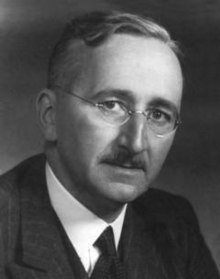
By the 1970’s the long period of post-war Keynesian-inspired prosperity was coming to an end in the West. Newly independent developing nations, while freed politically from the oppressions of colonialism, weren’t necessarily faring so well, but that’s another story. Before we address the reasons for the end of the so-called Golden Age of Capitalism, we need to take a smallish detour to touch upon another soon to be influential economic theory – the so-called Austrian School, and its most famous adherent, Friedrich Hayek[1], one of a group of (surprisingly) Austrian economists, including Hayek’s teacher Ludwig von Mises, who preached a fiercely individualistic, libertarian belief in the free market. It strongly influenced Milton Friedman and what became known as the Chicago School, whose alumni and acolytes became important figures in Western economic policy in years to come. (More on this later)
The neo-classicists believe in free markets too, I hear you say. True, but with a difference. While both neoclassical and Austrian economics are methodologically individualist and believe in a free market, the way in which they arrive at this common conclusion is substantially different. One of the central tenets of neoclassicism is its belief that it is rational behaviour, supported by perfect information, that underpins economic choice. Not so, say the Austrians – preferences and decisions are intensely personal and unknowable and are made with imperfect information. It defines economics as the study of ‘the processes and outcomes of the interaction of purposeful, subjective, free-willed, time-bound and knowledge-bound individuals’. It has no time for analysis of motivations, nor does it place any credence in suggestions that social forces have any influence on individual decisions. At least it does not believe in the myths of perfect information and information symmetry. It just doesn’t care about them. It believes that the way on which the market operates to match individual preferences to consume or save means that no government intervention is ever required or is desirable. Such intervention will inevitably distort the unknowable operations of the market and lead to market failure. Indeed, some Austrians hold that the cycles of boom and bust that characterise capitalism are a natural phenomenon, just like the Keynesians. Unlike the Keynesians, however, they oppose any interventions to address this cyclicality, holding that the government ‘cure’ is worse that the disease.
The spontaneous order that emerges from the operations of this free market ensures that the factors of production – labour, capital, land and entrepreneurship – are paid what they are worth, obviating the need for trade unions and other institutions. Prices will reach a fair level that will lead to full employment, and workers will be forced to accept wages that reflect their worth and therefore maintain full employment. Some radical Austrians[2] see the State as an ‘enforcing mechanism to enable the winning coalition to exploit the losing coalition without recourse to violence’. Any form of regulation on the operations of the market are seen as pernicious attempts to constrain individual freedom, to the extent that externalities, such as pollution, and the regulation of public goods, should be left to the law to address. The absence of regulation means that there is no basis for the government seeking to redress inequalities through taxation and redistribution. In the Austrian world such actions would distort the free operation of the market and the individuals who operate within it.
You might think that with all of this emphasis on individual freedom, and Hayek’s professed abhorrence of totalitarianism that the Austrians would be confirmed liberal democrats. Only to a point, however. Hayek is himself on record as saying that he preferred a dictatorship, such as Pinochet’s in Chile, that respected the rules of economic liberalism and property rights over a democracy that trampled on those rights.
I hope it has become clear that the Austrians have a fierce allegiance to the notions of individual liberty, a distrust of government and its interference in free individuals operating in a self-ordering free market. These beliefs attracted the attention of Right-wing thinkers and politicians just as the post-war Keynesian consensus was beginning to fall apart. It is to this subject that we will return in the next post.
[1] His The Road to Serfdom, published just after World War Two, is a powerful polemic against what he believed to be the dangers of totalitarianism. It remains influential to this day and is perhaps along with Stephen Hawking’s A Brief History of Time, one of those important books that few have started, and even fewer have finished.
[2] I use this term to denote followers of the school, who are not, of course, necessarily Austrian.
May 5: Some ramblings about Keynes and associated matters

We have heard from the neo-classicists from the Right, and the Marxists on the Left, with their dramatically different views of the role of the state in managing the economy. A third way emerged after the Great Depression of 1929 and the ensuing widespread poverty and hardship in the US and Europe. This third way became known as Keynesianism, not surprisingly after the name of its leading theorist, the British economist, JM (later Lord) Keynes, one of the most influential economists of the 20th century. He first came to prominence in 1919, when he published a critique of the Versailles treaty and forecast, correctly, that the onerous terms that it placed on Germany would lead to economic disaster in that country. The economic downturn of the 1930s and the failure of conventional economic theory to address it, led to him publishing the Means to Prosperity in 1933 and his General Theory in 1936. His ideas influenced Roosevelt’s interventionist New Deal and he became an advisor to the British Government during the War. He was one of the key architects of the post-war economic order created by the Bretton Woods agreements in 1944. These agreements established the International Monetary Fund (IMF), to provide emergency funding to distressed governments, the International Bank for Reconstruction and Development (the ‘World Bank’), to help post-war rebuilding, and the General Agreement on Tariffs and Trade, which later became the World Trade Organisation. Keynes believed that post-war economic stability needed there to be an international reserve currency, which he called the bancor. Harry Dexter White, the US economist, agreed in principle but insisted over Keynes’s objections that the reserve currency should be the US dollar, to be convertible to gold at $35 an ounce[1]. The US flexed its economic muscles in other ways at Bretton Woods – the constitutions of the World Bank and the IMF were so constructed as to provide the US with effective control of their policies[2]. This expression of hegemony was enough for Stalin to refuse to sign the agreements – another factor that contributed to the Cold War.
To return to Keynes after that digression. His ideas represented a dramatic shift from the prevailing wisdom of neo-classicism, which holds, if you remember, that the market, left to its own devices, will reach an optimal equilibrium point. Not true, he said. Markets can come to many different resting points that are not necessarily optimal or efficient. Neo-classical economics asserts that supply creates demand. Not so, says Keynes: that may be right in a barter economy, but not in a monetary one. Aggregate demand drives supply. Firms base decisions about what and how much to produce based on expected demand.[3] However, and here’s the rub, demand is not necessarily predictable and is influenced by a whole range of factors, including ‘consumer confidence’, the level of which can lead either to increased or reduced demand. Consumers’ confidence is affected by expectations about present and (uncertain) future conditions. So much for the rational agent, effortlessly weighing up all possibilities with access to perfect information. Of course, in any formal or informal transaction between buyer and seller one side, generally the seller, has access to more information than the buyer – called information asymmetry in the jargon[4].
Firms then need to make investment decisions in an atmosphere of uncertainty, based on long-term expectations of the future, which as we are only too painfully aware, can change very rapidly indeed. Keynes and his followers argue that negative external events lower expectations, which depress demand, leading to reduced investment, lower growth and increased unemployment. Without some sort of circuit-breaker, the economy descends into a self-fulfilling death spiral of cumulative causation. Of course, positive external events have the reverse effect, and can lead to demand exceeding available supply and pushing up prices, potentially leading to inflation.
The conventional circuit breaker in an economic downturn is to impose austerity: reduce government expenditure, hold down wages, cut interest rates, reduce taxes[5]. We’ve seen how well that has worked. Keynesians argue that holding down wages does nothing to prevent unemployment, and that policies of austerity suppress demand, which is what is required to encourage investment. They therefore see a central role for government policy to manage the inevitable cycles of boom and bust that characterise capitalist economies by increasing spending in a downturn to stimulate demand (and reducing it in a boom). This approach will of course lead inevitably to budget deficits, which we have been misled into thinking are a bad thing, by making the entirely erroneous comparison of the national budget to the household budget. Debt can be thought of being of two types. There is debt to finance investment – getting a mortgage, building infrastructure, a business buying equipment; there is debt incurred to cover day-to-day expenses, such as credit card debt, payday loans; covering short-term changes in the terms of trade. In the case of the household budget, investment debt is predicated on the long-term expectation of capital appreciation. In the same way, government debt to fund infrastructure aims to stimulate economic activity. Households that over-spend consistently become trapped in a cycle of indebtedness, unless they can cover, at the least, the cost of interest on their loans. In the case of governments, debt is funded by issuing bonds, generally of long maturity and at low interest. But, if at the least, governments can cover the cost of the interest on the debt by government revenues, debt doesn’t matter. In any case what do we use budget surpluses for? It can’t be for paying down the National Debt, which in Australia’s’ case is over $570 billion and will never need to be repaid as long as the economy keeps going and we can cover the interest on our treasury notes and bonds as outlined above. So, why this fetish about a surplus? If the social cost of achieving a surplus manifests itself in reduced well-being because of policies of austerity there doesn’t seem much point, does there? Especially if the ratio of government debt to GDP[6] is low, which it is in Australis’s case (about 46%, compared to over 100% in the US). Incidentally, there are only a very few countries without external debt, and they are either very small, tax havens or oil-rich or some combination of the three. Of greater concern is household debt, which is at 119% of GDP in Australia and has been rising steadily over the last 25 years, partly due to house price inflation and partly due to the reasons outlined in the following paragraph. Governments have occasionally expressed concern about the level of indebtedness. This concern manifests itself in encouraging savings. This strategy is flawed due to what Keynes called the fallacy of composition. It might be good for me to save, but if we all do, then what happens to aggregate demand?
Of course, much of the discussion about household debt must be seen in the context of environment of depressed wage growth in the recent decades of neo-liberalism. The levels of consumer demand required to sustain endless capital accumulation have inevitably led to unprecedented levels of unsecured consumer debt at often usurious rates of interest. It is to this phenomenon of neo-liberalism – its origins, philosophy and impact on the global economy and society to which I will turn in a later post.
[1] This decision would cause all sorts of problems later and lead to the end of currency stability in the 1970’s, with enormous implications – I shall return to it in a later post.
[2] It also led to the imposition of ‘conditionalities’ on loans to debtor nations. These generally involved opening up fragile developing world economies to trade at terms beneficial to the creditor and damaging to the debtor.
[3] However, as the renowned Canadian economist JK Galbraith argued, the power of marketing and advertising is used to create demand in the first place.
[4] We see examples of how this information asymmetry gets used in our everyday lives. Do you read the conditions when you install a piece of software? Or the product disclosure statement on a financial product? They are deliberately presented in such a way as to obscure the important information which are there by law, at least in part, to address the asymmetry.
[5] Especially for the wealthy, despite the lack of empirical evidence that it does anything to stimulate the economy. All it does is to increase inequality.
[6] A flawed way of measuring well-being, which I may have something to say about later.
May Day: Marx’s challenge to liberalism

The neo-classicists didn’t have things all their own way in the 19th century. Karl Marx created a powerful alternative theory, which viewed social and economic development through a historical lens, one that he then used to project into a very different future from that imagined by the liberalism of John Stuart Mill and his liberal friends.
Marx’s theory, which came to its fullest expression in the monumental, and monumentally dense, Capital is a comprehensive attempt to explain the development of society and the economy throughout history[1]. Unlike neo-classical economics, for Marx the unit of study was the social class, not the individual. He asserted that there was an historical inevitability about the progress of society from feudalism, through mercantile capitalism to industrial capitalism, and how the movement from one stage to another was the result of historical forces and class struggle. Marx believed that the exploitation of the working class – the proletariat in Marxist terms – by the capitalist class would lead inevitably to revolution and the dictatorship of the proletariat. This teleological process of historical development places his theory in direct opposition to the ahistoricism of the neo-classicists. While Marx was not very detailed in his explanation of the final stage, he believed that the dictatorship of the proletariat was but a step in the progress towards communism, and what Lenin called ‘the withering away of the State’.
The labour theory of value is central to Marxist thought. It holds that the value in a product is created from labour input (Adam Smith though the same thing!) and that any excess above that input – the surplus – is profit to the capitalist, in which workers do not share (and didn’t deserve to, according to Smith). This exploitation of labour leads to workers becoming commodified and alienated from their true nature. Marx believed that capitalism’s need for endless capital accumulation led to exploitation of human and natural resources and would lead to conflict between capitalists and workers. Incidentally, he also recognised that colonial expansion was an economic imperative for capital accumulation and would lead to the same issues of exploitation and alienation, a recognition shared by Lenin, who argued that imperialism was the highest stage of capitalism.
So, where did Marx’s predictions go wrong? There are a number of possible explanations. One, preferred by Trotskyists, who unsurprisingly have little love for Stalin, argues that the latter’s philosophy of socialism in one country was deeply flawed as it was excessively bureaucratic and failed to recognise the importance of mobilising the international working class. Stalin’s bureaucratic centralised Five-Year Plans created a command and control economy, where decisions flowed in one direction with little or no feedback and inhibited the withering away of the state. While this approach led to Russia becoming an advanced industrial power in a short period of time, with a comprehensive system of free education, health care and wage equality it came at a huge human cost. The inflexibility of this approach and its focus on heavy industry at the expense of consumer goods led to its downfall in 1989, and the prematurely triumphalist declaration of the ‘end of history’ by American neo-conservatives. Chinese Communism took a different line, with Mao emphasising peasant-led decentralised progress. Unfortunately the human cost of the Great Leap Forward, a manifestation of these ideas, was just as high. Another explanation was that Marx’s theories were excessively deterministic and failed to take account of human agency and the ability of capitalism to adapt and to mitigate its worst excesses during the late 19th century, at least in Western Europe. Some would argue that without the pressures brought to bear on the capitalist class by the labour movement, this adaptation would not have taken place.
Marx’s explanation for why things may not turn out according to plan was what due to what he called ‘false consciousness’: the way in which people often behave in ways that are not in their interest because they fail to recognise their true social and economic situation. Examples of false consciousness abound: working class people in deprived post-industrial areas of the US voting for a misogynistic billionaire narcissist; and many believing that transferring public goods to the private sector will lead to lower prices and better service. More recently Marxists, such as the late Herbert Marcuse, hold that consumerism has led to the working class becoming integrated into the capitalist system and that the pernicious influence of elite-owned mass communication media and its manipulation of information makes individuals passively complicit in their own oppression as they accept oppressive activities as normal. Marx famously asserted that religion was the opiate of the people: it may well have been so when he wrote it in the 19th century. If he were around today, he would probably suggest that consumerism was the new opiate.
Not surprisingly Marxists have a much more interventionist role in mind for the State than do neo-classicists. They believe, as did Lenin, that the State should have ownership of the commanding heights of the economy. Until the neo-liberal revolution of the late 1970s many Western Governments of both the Right and the Left, with the spectacular exception of the US[2], believed the same and controlled industries like the railways, steel production, communications, electricity, airlines, water and gas. We shall discuss why they no longer do so in a later post.
[1] Not to be confused with Thomas Piketty’s monumental and equally dense Capital in the 21st Century, a comprehensive analysis of the accumulation and distribution of capital and its impact on inequality: a subject he has recently returned to in yet another massive and comprehensive analysis of inequality and its historical and ideological trajectory, Capital and Ideology.
[2] The US’s persistent near sacralisation of its Locke-inspired Constitution, written as it was by a group of white, slave-owning male property owners in the late 18th century, has made many Americans believe that they are a group of rugged individualists oppressed, rather than protected, by their Government. In such a belief system, the state has a very limited role in the provision of public goods. One spectacular exception was the Federal funding of the Interstate Highway System by the Eisenhower Administration. Roosevelt’s New Deal saw considerable Federal funding of infrastructure during the Depression, for reasons that should be clear to us now in the days of COVID-19.
April 12: I am the Walras: or a brief wander through neoclassical economics
The Industrial Revolution didn’t only lead to increased specialisation in manufacturing, it also led to the creation of new disciplines of applied science. By the 1870’s, the social sciences fractured into separate disciplines of philosophy, psychology, sociology and so on – the so-called ‘soft sciences’. By now, political economists were beginning to emphasise what they saw as the mathematical and scientific nature of their discipline, moving away from the philosophical influences of Locke, Smith and Mill towards a new hard science of economics. A number of key ideas emerged from this reconsideration. According to the famous American economist, Robert Solow, the core principles of what became known as neoclassical economics were greed, rationality and equilibrium. Let’s consider these in turn. Greed suggests that humans are basically self-interested and will consume goods, until they don’t see the marginal benefit of consuming one more slice of pizza as worth the extra cost of buying one. That’s a (very) simplified version of the theory of marginal utility. Rationality, in this context, means that people weigh up the costs and benefits of every economic decision – and all decisions are economic: the economist Gary Becker suggested that family decisions such as having more children are made by weighing up the costs and benefits of such a decision. I reckon living in the Becker household would have been a spontaneous bundle of laughs. Furthermore, this principle holds that in weighing up these cost-benefit trade-offs, people have access to perfect information and that prices hold all the information needed to make a rational decision based on unchanging preferences. This perfectly rational, greedy, self-interested human became known as homo economus. The third leg of this trinity relies to an extent on the first two. Equilibrium holds that demand will be brought into balance by prices that ensure that production adjusts to demand. Central to this idea is the ‘law’ of supply and demand, which asserts that demand for an item will increase as the price for it falls. Conversely, producing more of an item will cost more. If we plot these relationships on a graph, we get a picture like this:

Source: Foundation for Economic Education. Found at https://fee.org/articles/the-law-of-supply-and-demand/
So, equilibrium is reached when the price for a slice of pizza (P*) reaches the point where demand for pizza (Q*) ensures that just the right amount of pizza is produced so that the supplier is not left with unsold pizza: the Goldilocks moment. Not everyone thinks that things are that simple.
Let us see if we can tease out some problems with these hypotheses. Let’s begin with greed and self-interest. If it were true that all people were only greedy and self-interested, how do we explain the self-sacrifice and community spirit being demonstrated by many during the current pandemic. The economist Samuel Bowles also suggests that incentives can either crowd-in or crowd-out co-operative pro-social behaviours. Certainly the evidence of the role of incentives to reward anti-social behaviours by bankers in the period leading up to the GFC supports this hypothesis. On the other hand, conspicuous consumption of egregiously over-priced luxuries, while clear evidence of greed, suggests that marginal utility is not always a significant contributor to purchasing decisions.
Now for rationality. Countless experiments and the evidence of everyday life indicate that people are, in different ways and to different extents, an often-frustrating mixture of irrational behaviours, instinctive responses, deep-seated prejudices and rational thought. The behavioural economist Daniel Kahneman and his colleague Amos Tversky demonstrated in a series of experiments, and later in a book by Kahneman, Thinking Fast and Slow, that people often make decisions instinctively, without considering the evidence (and sometimes in the face of it), are influenced by the way in which questions are framed, abstract from previous, often flawed recollections of previous experience, and selectively use evidence to support their preconceived decisions. And sometimes they are rational!
And now to equilibrium. The economic history of the world is littered with examples of disequilibrium, from the Dutch Tulip Mania, the South Sea Bubble, the Great Crash of 1929, the Dot.com Bubble, and most notably the GFC. All of them were driven by irrational exuberance, or what Keynes called ‘animal spirits’, not rationality. Price signals did not dampen demand, they reinforced it: greed perhaps, but certainly not rationality. Indeed, these events might suggest that capitalism is inherently unstable – indeed, the great financial economist Hyman Minsky has suggested just that. There have been a number of attempts by eminent economists to explain the phenomenon of boom and bust economic cycles within the framework of equilibrium theory, including the exotically named Dynamic Stochastic General Equilibrium. Not every economist buys into these models.
Modelling occupies an important position in neoclassical economics. It relies on elegant, increasingly sophisticated, often highly mathematical models to represent the world. Models are of course important. They enable us to select the important aspects of reality and can have immense predictive power. An important feature of well-constructed models is that of isomorphism – the degree to which they accurately represent the chosen aspects of reality. Their limitations, assumptions and constraints need to be made explicit. After all, the map is not the territory. It is questionable whether the economic models outlined above fulfil that requirement, given the criticisms of their limitations. Slavish adherence to models can also lead to flawed policy decisions, especially when those models are themselves flawed. Two examples will suffice. The Kuznets curve suggested that in periods of economic growth, inequality would rise in the short-term but correct itself over the long-term. That hasn’t happened over the last 40 years, has it? (Kuznets later said his curve had been misunderstood). The Laffer curve, much beloved of Reagan, suggested that lowering tax rates would increase economic growth and therefore boost government revenue. Maybe in theory, but it didn’t do much for government deficits in the Reagan years. When the outcomes predicted by the models don’t happen, then perhaps reality is at fault? If people were only to behave rationally – that is, in accordance with the models.
I concede that I have presented a somewhat selective and biased view of the discipline of neoclassical economics but I still think it is worth questioning why it exerts such a strong influence over policy makers in central banks and international financial institutions such as the IMF, with their obsession with monetary policy and austerity. I don’t know for sure, but Thomas Kühn’s much misused theory of scientific paradigms might help. He argued that scientists, consciously or unconsciously, discount or reject data that challenges their preconceived theories, and reward those ideas that support them. Neoclassical economics has been the dominant paradigm for a very long time (but see neoliberalism below). It is taught in universities by academics who themselves were taught by academics who were schooled in the neoclassical tradition. Economics departments are run by neo-classicists. Graduates from these universities become academics or policy makers or politicians. In this way, the discourse has become dominated by the neoclassical wisdom.
However, this conventional wisdom has been challenged from the Right and from the Left. The policies of the long post-war economic boom were heavily influenced by Keynesian ideas of economic management, and the central role of government. This so-called ‘golden age’ came to an end with the crisis of capital accumulation in the late 1970’s which ushered in the neoliberal ideas of Hayek and Friedman. (More on Keynes, Hayek and Friedman in a later post).
Finally, some questions about the role of government in the management of the economy from the neoclassical point of view. In a general sense, it is based on JS Mill’s idea that the only role of the state is to prevent harm. Any other intervention will damage the delicate balance of greed, rationality and equilibrium that ensures the proper functioning of markets. There is some debate as to the extent to which the ‘do no harm’ principle functions in practice. Does it extend to preventing monopoly power? Should governments intervene to prevent moral hazard? How far should it go in regulating markets to ensure competition? How independent should central banks be in formulating monetary policy in general and setting interest rates in particular? To what extent should it control the provision of public goods such as public parks, national defence, roads, rail, water and electricity? I may return to these questions in later posts.
PS Why Walras? He is famous for his ideas on equilibrium and the notion of the hypothetical ‘auctioneer’ who matches buyers and sellers to arrive at an agreed price in perfect competition.
April 6: How economics came to rule the world: Part One
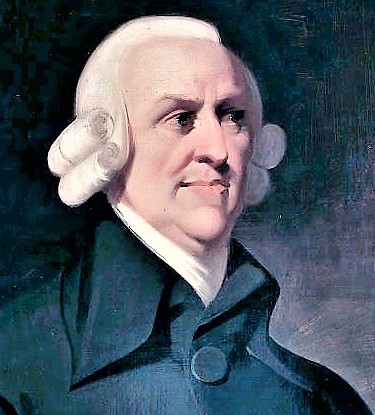
Choosing a place to start this informal history of economic thought is fraught with difficulty and is, as a result, more or less arbitrary. Another challenge is deciding what to leave out. Having got those excuses out of the way, let’s start with Adam Smith. Smith and his friend and contemporary, David Hume, described themselves moral philosophers, and it was the publication of Smith’s famous The Wealth of Nations that, for all intents and purposes, started the discipline of what later became known as classical economics.
We should begin with a bit of context. When Smith wrote his book in 1776, Britain was undergoing a series of agricultural changes – enclosure of common land, the establishment of tenant farmers, and labourers to work for them, and new techniques of production. At the same time, the Industrial Revolution, driven, among other things, by the introduction of new machinery to enable mass production and the availability of labour which had been displaced from the land by the agricultural changes outlined above, led to the emergence of a new capitalist class.
Just like Hume, Smith though that people were driven by self-interest – certainly the agricultural and industrial changes that were taking place at the time would tend to support that notion – and a desire to trade, a necessity that began with bartering in the subsistence economy. Smith illustrated this principle with this famous example: “It is not from the benevolence of the butcher, brewer, or baker that we expect our dinner, but from regard to their own interest”. In this way, Smith held that the economy worked by means of what he called ‘an invisible hand’. He believed that the markets that arose from the operation of this invisible hand ensured economic efficiency, provided rewards for taking risk and ensured the proper distribution of income: all of which means of course that government intervention only messes things up. He also argued that the price of something was made up of three things: wages to workers, profits to capitalists (the reward for taking risk) and rents to landowners (many of whom had acquired land through the enclosure appropriation). Competition would make sure that these prices would reach their natural level and that the three components of prices would be fairly distributed. The accumulation of capital which resulted from economic activity was the engine of economic growth; its continuation became an imperative for capitalism to sustain. Another key principle of Smith’s philosophy of political economy was wat he called the division of labour – the breaking down of a process into smaller parts to allow for specialisation and increased efficiency. This principle reached its zenith in Fordist mass production. Smith had a lot more to say but I think this sketch is enough for our purposes.
The next great contributor to the growth of the discipline of classical economics was David Ricardo. He made a number of contributions to economic thought, but his most famous was his theory of comparative advantage, which held that the specialisation of labour and skill that Smith had proposed should be employed on an international level, with each country focusing its energies on those products for which its particular circumstances gave it an advantage. His famous example was that of British cloth and Portuguese wine. He argued that by Britain focusing on producing cloth and Portugal wine, both countries would benefit by trading these commodities rather than attempting to be self-sufficient in both. As you can see by now, the adoption of this principle led to the opening up of trade between countries, although it didn’t stop countries from establishing tariffs and other forms of protection to protect some sectors of the economy. Throughout the Industrial Revolution and beyond, Britain and other advanced capitalist nations used tariffs and quotas to protect important sectors of the economy. Despite contemporary rhetoric about free trade and level playing fields, tariff barriers are still employed, largely by developed countries. The asymmetry of power that exists in trade between the developed and developing world means that aid to or investment in the developing world is often contingent on the imposition of trade rules designed to benefit the donor country at the expense of the recipient.
Before bringing this brief review to an end, we must return to John Stuart Mill. While his On Liberty discussed the issue of values, and how consideration of them could be used to make decisions on how wealth could be distributed, his Principles of Political Economy argued that competitive free markets formed the underpinning of a science of economics. It is to the development of this idea that we shall turn to in a future post.
April 3: Individual Rights and the Role of Government. How did we get here?
Before I embark on my amble through the unfashionable subject of economic history, I think I want to start by examining the question of individualism and how we ended up with our way of thinking about individual rights and obligations, and in consequence, the role of government and other institutions in the operation of the so-called ‘free’ market.
So where did this idea of individual rights and freedoms come from? The short answer is the Enlightenment, which challenged the existing feudal order and the supremacy of the monarchy and helped to create a new and increasingly powerful merchant class (it is beyond my scope and competence of this essay to discuss the Enlightenment in depth). Through the works of Locke, Smith, Hume and others, ideas of rights and freedom began to be openly discussed. John Locke, one of the most important early capitalist philosophers, argued that people had the rights to the products they had derived from the earth: in essence these included rights to the commodities that people produced and to the land on which they produced them. And, as the labour people expended on these activities belonged to them, they could, if they wished, sell this labour for a wage, with the buyer – employer – entitled to set a price he was willing to pay. Locke also argued that placing value on land meant that those with the most money could buy the most land, without limit. Here we see the first examples of the basis for capitalist development: the notion of ‘free land’ to those who wanted to work it (this was an inspiration to the US Founding Fathers); the idea of unequal property relations based on wealth; and the creation of a market for labour.
The Scottish philosopher David Hume thought that people were driven by self-interest but realised that a societal framework and set of rules, or institutions, to constrain self-interest was required to ensure the smooth ordering of society. It is this idea of self-interest that Hume’s friend and contemporary Adam Smith used a basis for his Wealth of Nations, the publication of which can be said to have heralded the new discipline of political economy (more on Smith later).
So why didn’t something similar happen in, say, China, Japan, Russia and Eastern Europe? China, until it was forced to open its borders in the 19th century by British and French threats of, and actual use of, violence, was a closed society, ruled by an absolute monarch and powerful warlords. The overarching philosophy was that of Confucianism, with its tenets of loyalty and obedience. Similarly, Japan, at least until the Meiji restoration in 1858, was similarly closed to foreigners and ruled by a divine Emperor, whose rule was absolute. The Russian Empire was also ruled by an absolute monarch who suppressed any ideas about freedom ruthlessly – indeed serfdom was not officially abolished until 1867, although in practice feudalism continued to exist in Russia until the 1917 Revolution. The Bolshevik Revolution had no truck with the Enlightenment values of freedom and individualism, replacing these ideals with ones of discipline, collectivism and submission to the authority of the State. (Of course, the Marxist view was that the dictatorship of the proletariat was but a temporary phase on the way to the eventual withering away of the State. This didn’t happen for a whole host of reasons which cannot concern us here.) The rise to power of Joseph Stalin in the 1920’s after the death of Lenin, reinforced this collectivist, centralised, State led philosophy of what became known as Stalinism. None of this Enlightenment stuff for us, thanks.
After the disorderly collapse of communism and the frantic dismemberment of state-run enterprises, Russia became an oligarchy, with wealth and power concentrated in an unelected elite.
A similar thing happened in China, of course. After WWII, the Nationalists and the Communists inevitably fell out and after a bloody conflict, Mao Zedong’s Communists won the day and introduced a Chinese flavour of peasant led socialism which got its own name – Maoism. Since Mao’s death and Deng Xiaoping’s reforms, China has become a state capitalist society.
Japan, as it had been defeated by the Allies in WWII, fell under the hegemonic influence of the USA with its belief in Lockean individualism. As such, whatever its cultural philosophy, it embraced, or was forced to embrace, the disciplines of the ‘free’ market. However, Singapore is a great example of how collective will can be employed to build a thriving nation-state. When I lived there some years ago, I was privileged to be invited to the National Day celebrations, where a slogan was displayed that emphasised nation before family, and family before individual reinforced this unifying principle. Of course, since that time, memories of Singapore’s beginnings have faded and Western individualism has increased in influence, especially among the young.
In the 19th century, the present countries of Eastern Europe were either colonies of Austria-Hungary, Russia or the Ottoman Empire and not open to the ideas of the Enlightenment. By the 19th century the Ottoman Empire was in decline, riven by independence movements such as those in Greece. Nevertheless, even the newly independent countries were largely semi-feudal and pre-industrial, lacking a merchant class and stable institutions.
The Enlightenment values of individualism and liberty led to the development of the political and economic philosophy of liberalism as espoused by Locke and refined by John Stuart Mill and others. As the Enlightenment didn’t reach the East, as loosely defined above, these ideals didn’t take root and the subordination of the individual to the State in semi-feudal societies was replaced over time by collectivist, authoritarian philosophies, based on the ideas of Lenin, Stalin and Mao.
The post-Enlightenment belief in rights and freedoms and the ability for people to buy and sell labour, land and property based on self-interest restrained as necessary by institutional rules is the basis of modern liberalism. Perhaps the greatest exponent of the ideals of liberty was John Stuart Mill. He argued in essence that governments should only ever interfere in civil society to protect its citizens from harm. In his famous On Liberty, he introduced the idea of positive liberty: people’s right to be free to do as they wished, subject to the constraints above, as opposed to earlier ideas of freedom from oppression and other impositions – negative liberty. It should be noted, however, that these rights and freedoms were restricted to white capitalist men, not workers, peasants, women or black people. The freedom to pass on wealth to the next generation ensured that this asymmetry of wealth and power was sustained. So, through the ideas of Locke, Hume. Mill and of Adam Smith, Ricardo (of which more later) and others, these liberal ideas became the prevailing economic and social discourse in the Western world for the next 150 years. Their legacy can be found in contemporary social and economic policy and form what the great Canadian economist JK Galbraith described as ‘conventional wisdom’. In later essays, I hope to be able to question some of the assumptions of this wisdom.
 Miscellany